Destinations
- Chilaw
- Puttalam
- Anuradhapura
Day 01
Pick up from the Hikkaduwa hotel or Colombo airport and drive to Anuradhapura via Chilaw and Puttalam road. En-route visiting Munneswaram Hindu temple and Puttalam salt factory, Proceed to Anuradhapura. Check-in your hotel, Overnight stay Anuradhapura.
Chilaw
The first stop is in Chilaw, There is a saying that “Chilaw is famous for Crabs, Coconuts, and Coreas,” a testament to the influence of the Corea Family who hail from this town. Chilaw is famous for the nearby Munneswaram temple, which is visited by both Hindus as well as Buddhists. We proceed to Puttalam.
Puttalam
Puttalam is a small town but a very populous town. Famous for salt and fishing, Puttalam is the home to one of Sri Lanka’s largest lagoons, also called the Puttalam lagoon. We visit the salt factory.
Anuradhapura
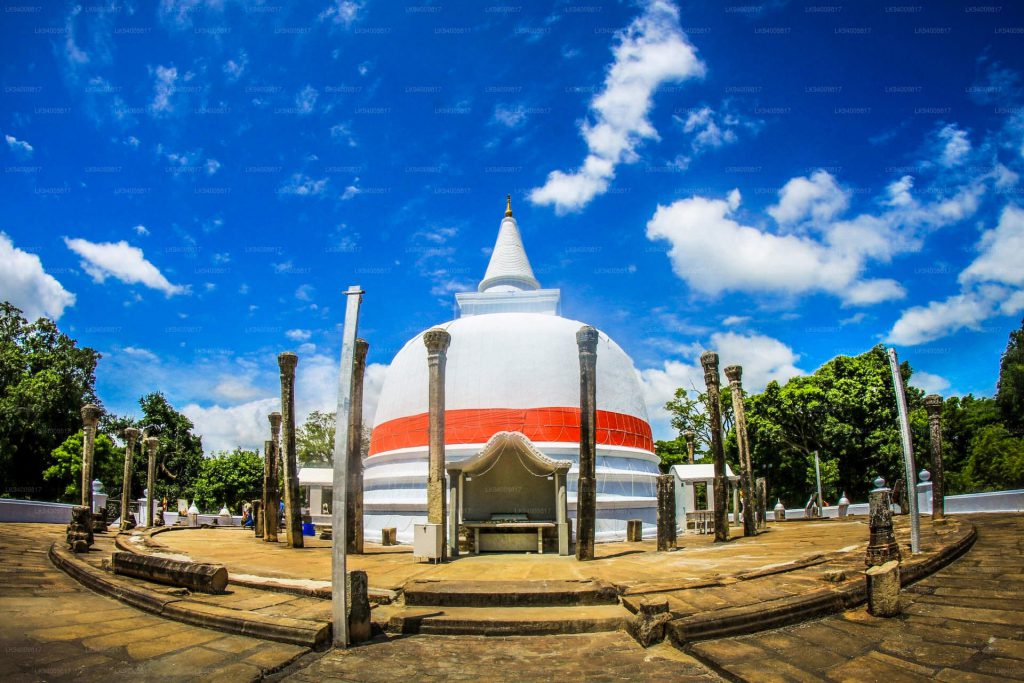
Anuradhapura is an ancient city which as Mahavamsa, the great chronicle affirms, was founded in 380 BC by Prince Pandukabhaya. It remained the capital of Sri Lanka for about 1400 years and is the oldest city of Sri Lanka. Anuradhapura is bestowed with a plethora of historical monuments such as colossal dagobas, monasteries, temple complexes, palaces and many more amazing structures, and hundreds of huge reservoirs.
Famous for its well-preserved ruins of ancient Lankan civilization. From the 4th century BC, it was the capital of Sri Lanka until the beginning of the 11th century AD. A World Heritage Site declared by UNESCO, Anuradhapura is one of the most sacred cities in Sri Lanka as it is home to the sacred Jaya Sri Maha Bodhi tree under which Prince Siddhartha attained enlightenment (Buddha-hood).
The introduction of Buddhism to Lanka also took place in Anuradhapura during there reign of king Devanampiyatissa (247-207 BC). The ancient city, considered sacred to the Buddhist world, is today surrounded by monasteries covering an area of over sixteen square miles (40 km).
Day 02
After breakfast, we proceed to the Ancient city of Anuradhapura- Sri Maha Bodhi, the oldest historically documented tree in the world, Abayagiri Dagaba, Ruwanwelisaya Stupa, Thuparamaya dagaba, Lovamahapaya, Jetavanaramaya Stupa, Mirisaveti Stupa, and Lankarama stupa. After that, we return to the airport, Hikkaduwa, or the selected hotel.
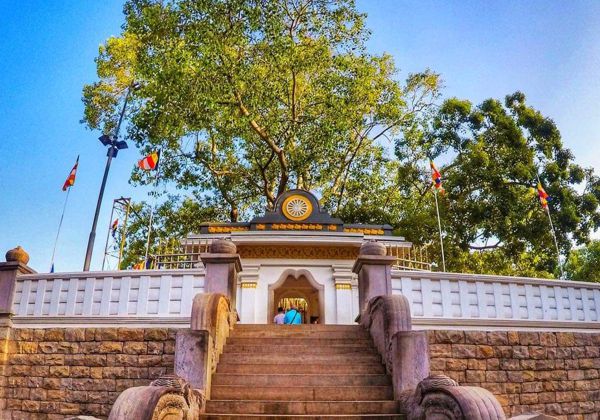
Sri Maha Bodhi
Sri Maha Bodhi An offshoot of the historical Bodhi tree under which Buddha became enlightened was planted in Anuradhapura in 288 BC and is the oldest living human-planted tree in the world with known planting date. Today it is one of the most sacred relics of the Buddhists in Sri Lanka and respected by Buddhists all over the world.
In the 3rd century BC, it was brought to Sri Lanka by Sangamitta Theri the daughter of Emperor Asoka and founder of an order of Buddhist nuns in Sri Lanka. In 288 BC it was planted by King Devanampiyatissa.
Abayagiri Dagaba
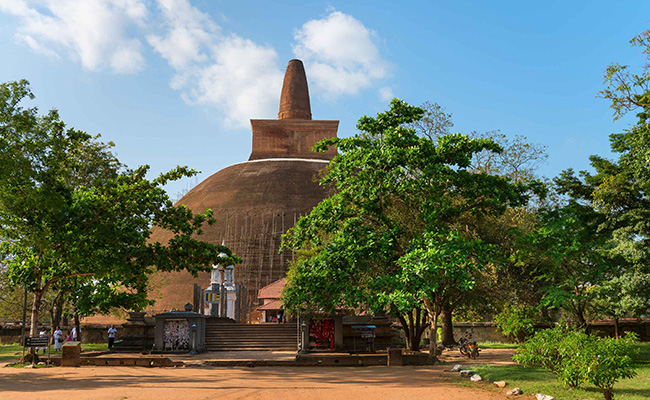
Abayagiri Dagaba is one of the most sacred Buddhist pilgrimage towns and extensive ruins in the world. Abhayagiri is a huge dagoba with a large monastic complex built by King Walagamba during the 2nd century BC. The dagoba originally stood 117 meters high, but today it stands only 75 meters high.
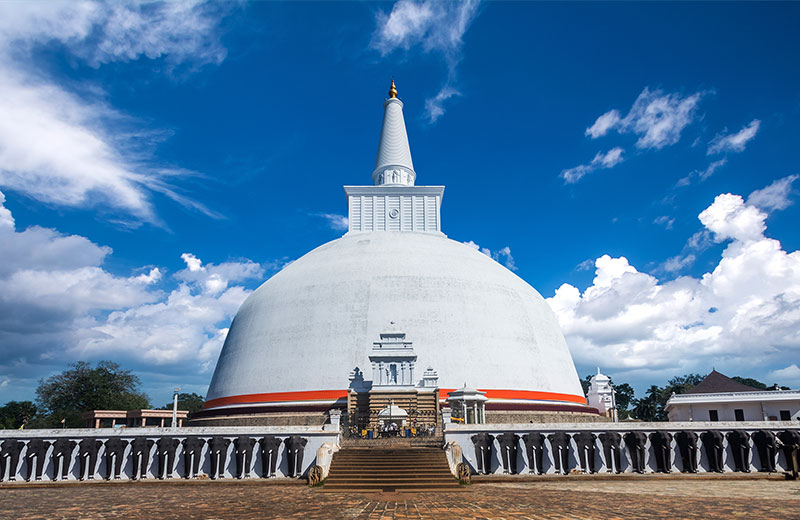
Ruwanweliseya Dagaba
Ruwanweliseya Dagaba is a huge 55 – meters tall bubble-shaped dagaba built in the 2nd century BCE by King Dutugemunu. This is one of the “Solosmasthana” (the 16 places of veneration) and the “Atamasthana” (the 8 places of veneration in the ancient sacred city of Anuradhapura). The stupa is one of the world’s tallest monuments, standing at 103 m (338 ft) and with a circumference of 290 m (951 ft)
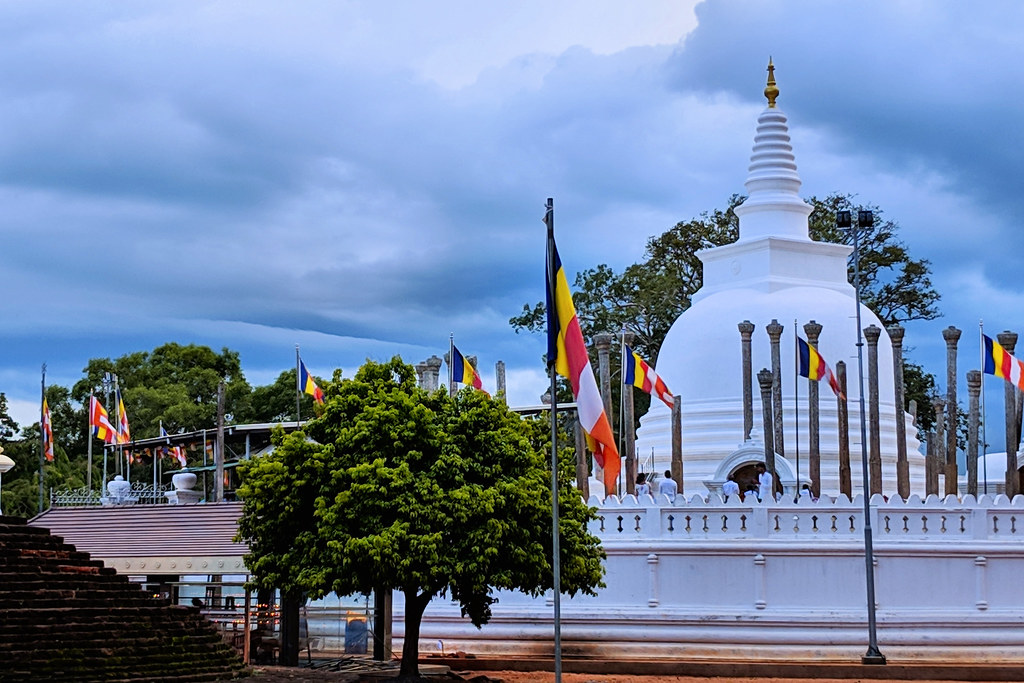
Thuparamaya Stupa
Thuparamaya Stupa is an ancient Buddhist temple in Anuradhapura, Sri Lanka. Located in the sacred area of Mahamewna park, the Thuparamaya Stupa is the earliest Dagoba to be constructed on the island, dating back to the reign of King DevanampiyaTissa (247-207 BC).[1] The temple has been formally recognized by the Government as an archaeological site in Sri Lanka.
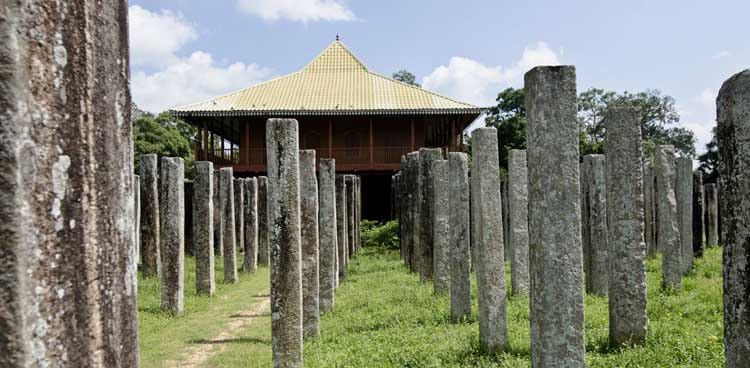
Lovamahapaya
Lovamahapaya or the (Brazen Palace) is an ancient building that had a bronze roof. Originally built by King Dutugamunu more than 2000 years ago. The famous Lohaprasada is described as an edifice of nine storied 150 ft tall buildings that could accommodate 100 monks. One side of the building was 400 ft (120 m) in length. There are 40 rows, each row consisting of 40 stone pillars, can be seen today are 1600 stone pillars.
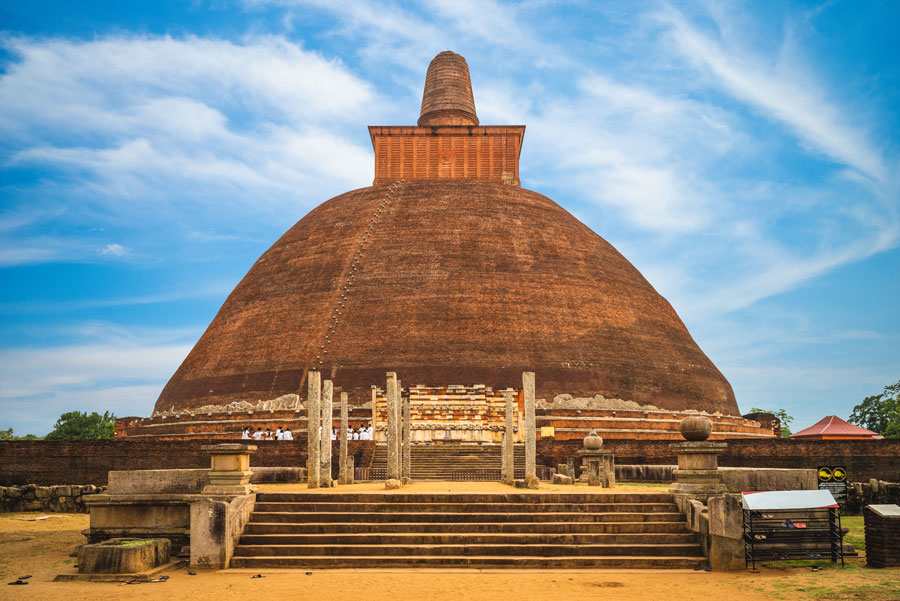
Jetavanaramaya Stupa
Jetavanaramaya Stupa (the world’s tallest stupa) is a stupa located in the ruins of Jetavana in the sacred world heritage city of Anuradhapura, Sri Lanka. At 122 meters (400 ft) it is the world’s tallest stupa. Built by King Mahasena (273-301 AD)
Mirisavetiya Dagaba
Mirisavetiya Dagaba.The Mirisaweti Stupa (Mirisavæṭiya) is situated in the ancient city of Anuradhapura, Sri Lanka.KingDutugamunu (161 BC to 137 BC) built the Mirisaveti Stupa after defeating King Elara. After placing the Buddha relics in the scepter, he had gone to Tissa Wewa for a bath leaving the scepter. After the bath, he returned to the place where the scepter was placed, and it is said that it could not be moved.
The stupa was built in the place where the scepter stood. It is also said that he remembered that he partook in a chilly curry without offering it to the sangha. In order to punish himself, he built the Mirisavetiya Dagaba.
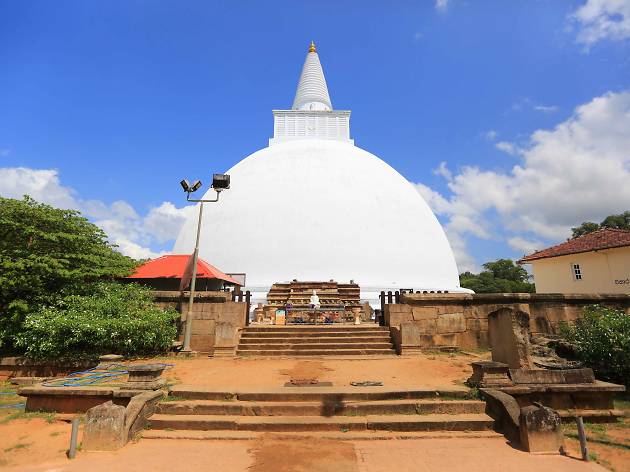
Lankarama stupa
Lankarama stupa. Lankarama is a stupa built by King Valagamba, in an ancient place at Galhebakada in the ancient kingdom of Anuradhapura, and later this was renovated. The ruins show that there are rows of stone pillars and it is no doubt that there has been a house built encircling the Stupa (vatadage) to cover it. The round courtyard of the stupa seems to be 10 feet (3 m) above the ground. The diameter of the stupa is 45 feet (14 m). The courtyard is circular in shape and the diameter is 1332 feet (406 m).